Carob – The Forgotten Gold of the Mediterranean

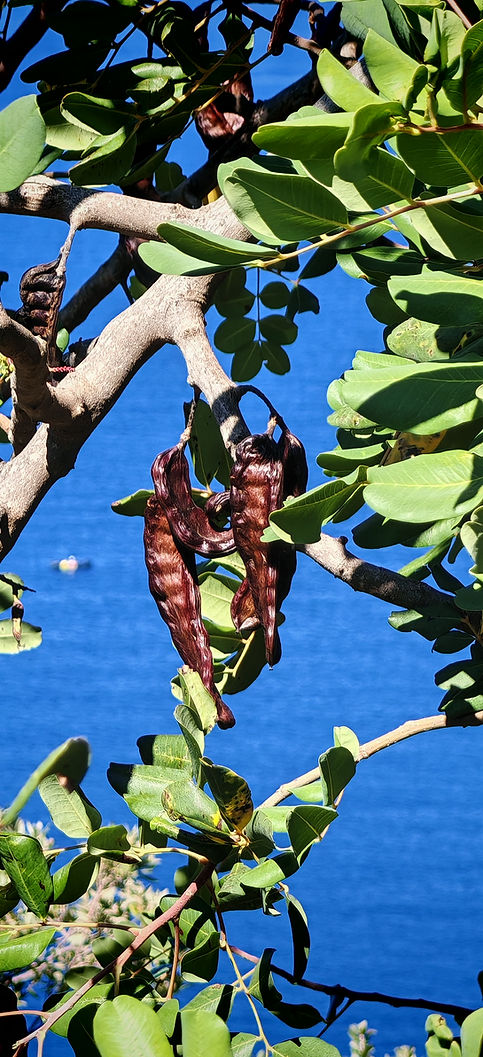
At Molonta Heritage Estate we proudly grow one of the most authentic and timeless Mediterranean crops – carob (Ceratonia siliqua). Located in the very south of Konavle and Croatia, our farm produces 4 to 5 tons of carob every year from our mature, centuries-old trees that have shaped both the landscape and the heritage of this region.
Historical Notes
The word “carob tree”, or more precisely – carob bush, comes from the Arabic word kharrub (الخروب), while in Hebrew it is called charub (חרוב). The generic name Ceratonia comes from κεράτια, keratonia, which in ancient Greek means “little horn” (referring to its pods that are horn-shaped when ripe). The species name, siliqua, in Latin means capsule or pod. However, over time, numerous synonyms for the “sweetest plant” in the Mediterranean will appear, for example: Pythagorean bread, Egyptian fig.
Like many other things, the carob tree seems to be of Middle Eastern origin, with its ancient roots growing in Syria and Palestine, which should not be in doubt since the Greeks and Romans went to Asia Minor to obtain the best carob, or rather carob seeds, in a precisely defined area, in the immediate vicinity of present-day Turkey.
In Egypt, the carob tree was known as the fig tree, because it majestically dominates the fig trees, creating a characteristic and unique Egyptian landscape. They took the name from the Greeks, because the fig tree was brought to Egypt from Greece during the time of Alexander the Great (3rd century BC), and it gained immense popularity during the time of the Ptolemies, Cleopatra's ancestors, so the plant had a special meaning for the Egyptians, whose name was associated for centuries with the most beloved tree in Egypt - the fig tree.

Ancient Egyptians skillfully utilized the carob tree's durable wood to create a wide range of objects. It was a preferred material for crafting elegant furniture like chairs, tables, and chests, as well as ceremonial items such as shrines, staffs, and mummy labels. The wood's strength also made it ideal for building chariots and formidable weapons like bows.
Beyond its wood, the carob's pods and seeds were equally prized. They served as a crucial animal feed and were even ground up and used as an ingredient in ancient Egyptian beer. The powdered pods were believed to have medicinal properties and were used as a vermifuge. Additionally, ancient records show that ground carob pellets were rubbed onto the body, possibly as a type of deodorant.
Perhaps the most fascinating use of the carob tree was in food and symbolic rituals. The fruit's natural sweetness made it a popular sweetener, and it was often included in burials, symbolizing the wish for a sweet and prosperous afterlife. Its significance was so great that the hieroglyphic for the carob tree was actually used in the ancient Egyptian word for "sweet." A popular dish was a type of pudding made from ground carob beans mixed with milk, which would naturally set into a jelly-like consistency.
The immense value of the carob tree is highlighted in the Harris Papyrus, which records a staggering offering by Ramses III of 106,000 carob pods to temples during religious festivals. This generous gift underscores the tree's importance, not just as a practical resource, but as a symbol of abundance and divine favor in ancient Egypt.

In Europe, it is still called "johannisbrotbaum" (St. John's bread tree, or St. John's bread) in German and other Anglo-Saxon languages.
Another saint is associated with the carob tree – St. George, born in Palestine. Chapels dedicated to St. George, who was invoked in cases of skin diseases, were built everywhere in the shade of the carob tree.
The carob tree was once considered a real treasure. Its small, hard seeds were historically used as a standard measure for gold karats, which is why it was nicknamed "Mediterranean gold".
The carob seed (Greek = keration) was used in ancient times as a measure for weighing gold, one seed = 1 carat. Regardless of size and storage conditions, the carob seed always has the same mass of 0.18 grams, so the name has been retained to this day for the same grammage.

However, over the centuries its value has been largely forgotten. Today, we are bringing back its golden legacy – through modern gastronomy, sustainable agriculture and careful harvesting on our estate.
Harvesting and Processing at Molonta Heritage
Carob harvesting at Molonta Heritage is a labor of love. The pods are hand-picked in late August and early September when they are fully ripe and dry, and then carefully sorted, packed and transported. A significant portion of our harvest is sent to trusted processors who process it into carob powder, also known as carob flour.

In the food industry, carob is used to obtain LBG (carob gum) or the food additive E410, galactomannan from the endosperm of the carob seed. It is used as an additive to various food products as a stabilizer, thickener or dispersant in the production of juices, baby food and more.
This natural, nutrient-rich flour is increasingly popular in modern cuisine as a healthy and delicious alternative to cocoa, and is used in desserts, baked goods, beverages and various culinary creations. By transforming our carob into high-quality products, we are helping to revive its role as a valued Mediterranean ingredient.
Carob – a symbol of sustainability and authenticity
At Molonta Heritage Estate, we are committed to sustainable agriculture and the preservation of local traditions. Every ton of carob we harvest and send for processing testifies to our commitment and respect for the Earth. Through careful cultivation, hand-harvesting and collaboration with local processors, we ensure that carob thrives again - as a healthy, authentic and delicious product.
Carob is no longer forgotten gold. Today, it represents Mediterranean heritage, bridging the past and the present, natural nutrition and modern culinary innovations.
At Molonta Heritage Estate, carob is more than just the fruit from our trees – it's a story, a taste, and a heritage that we are proud to share with the world.

From the sun-kissed carob trees of our estate to a bottle of our handcrafted carob liqueur, we are delighted to share the rich taste and heritage of Molonta with you:
Carob Liqueur – Traditional recipe from Molonta Heritage Estate
Ingredients:
8–10 juicy, ripe carobs
1 liter of homemade brandy (preferably grape or herb brandy)
rind of 1 lemon (optional)
pinch of grated nutmeg (optional)
100–150 g sugar (depending on desired sweetness)
Preparation:
Wash and cut the carobs into 2–3 cm pieces.
Wash and cut the lemon into thin slices (you can lightly peel the peel and add it).
Place the carobs, lemon, and nutmeg in a large jar and pour over the brandy.
Add the sugar and mix well.
Close the jar and place it in a sunny place. Shake it daily to dissolve the sugar more quickly.
After 40 days, strain the liqueur through cheesecloth or a fine strainer.
If desired, you can add a little more sugar for extra sweetness.
Let the liqueur sit for a few more days before drinking.
Cheers!!!

This liqueur is known for its benefits for the stomach and is often used to relieve indigestion.


Comments