The Treasure of Konavle: Costume and Jewelry

Updated: Oct 14, 2024
Konavle, a mystical corner of the Croatian south, is a place where tradition has left an indelible mark, enduring through time and lending an eternal beauty to the landscape.
Throughout history, the identity of people and places has been expressed through traditional dress. The Konavle folk costume, especially the women's costume, embodies a centuries-old culture of this region in a uniquely beautiful, elegant, and aesthetic way. It remains perhaps the finest representation of Croatia's folk heritage.
Evolved and perfected over centuries, this costume reflects the cultural identity of Konavle and tells the story of the region's life, work, and celebrations.
The harmony of natural materials, intricate embroidery, jewelry, and specific garments give Konavle women a special elegance throughout their lives, from youth to old age. While sharing fundamental elements (embroidery on the chest and sleeves, a defined waist, ankle-length skirts, and head coverings), the Konavle costume reveals a woman's wealth and, especially, her social status through subtle details.

Konavle Costume and Jewelry, Metkovic Family
Konavle embroidery is the primary decorative element of women's dress, adorning the bodice and sleeves. These were embroidered with silk thread that was obtained from silkworms carefully cultivated in every Konavle household, and was dyed with natural colors. This silk production took place every spring, and each Konavle girl was expected to raise enough silkworms to produce her own thread for embroidery.
By the time of her marriage, she would have completed all her embroidery for every life occasion, and it served, along with her jewelry, as her only personal identifier for a long time. Each embroidered piece has its own language, which speaks about its embroiderer, her skills, wealth or poverty.
When incorporated into her costume, it becomes a part of her personality. Konavle embroidery is worn on the chest and sleeve cuffs, where jewelry is worn today, and on the part of the body we point to when we say "I".

Following family tradition, our youngest Metković, wore the Konavle costume for her First Holy Communion.
As a significant element of a small region's attire, Konavle embroidery developed its own visual language and became much more than mere decoration. Strict symmetrical geometric motifs in countless variations, most often in red, black, and dark green with golden yellow borders, are characteristic.

The traditional process of raising silkworms for silk production
Vogue, the world's most renowned fashion magazine, features a Konavle woman in traditional dress. Luce Đuratović from Vitaljina graces the cover of Vogue, Photographed by Adam Specner Young, 2019.

Konavle native, Luce Đuratović, captivated photographer Adam Spencer Young with her character, spirit, and, of course, her traditional Konavle costume. Thus, Tete Luce was featured in Vogue, a magazine that has featured the likes of Beyonce, Madonna, Naomi Campbell, Angelina Jolie, Audrey Hepburn, Elizabeth Taylor, Greta Thunberg, and Queen Elizabeth II. Life writes interesting stories, doesn't it? And this story was written thanks to the aforementioned British photographer of Croatian descent, who specializes in portraits. He took these photos two years ago as part of his "Reflection" project, which aims to photograph older people and ask them for life advice
Next to an olive tree, a symbol of wisdom and eternity, Tete Luce revealed her secret to happiness – gratitude and humility, and not taking anything for granted. Judging by the photo, we can conclude that her advice is certainly worth following.
It's important to remember that the Konavle costume was mandatory attire for all women until after World War II. Only from the 1950's onwards did women gradually start wearing civilian clothes for everyday use, especially children and younger women. As a result, most women in the second half of the 20th century only wore the Konavle costume for special occasions, such as Sunday mass, important visits, weddings, and other festivities.
The female headdress was found in all traditional and cultural regions of Croatia, and has always carried information about a woman's social status. This tradition is also rooted in Konavle. The headdress revealed all the status changes a woman went through during her lifetime, so it was used to distinguish between girls, engaged girls, brides, married women, unmarried women, and widows. The headdress would change according to a woman's age and life events.
Konavle Jewelry
Traditional jewelry, as an integral part of festive folk costumes within Croatian folk culture, comes in a wide variety of forms. It's notable that women adorned themselves with jewelry more than men. In addition to decoration, jewelry also served to demonstrate social status, social power, and personal or group identity.

Family jewelry, Konavle "veželice“

Traditional Konavle "fjočice" wedding earrings
Almost all Konavle jewelry was a valuable part of a family's household treasures, passed down from generation to generation. The gifting of jewelry from mother to daughter was particularly significant, ensuring it remained within the family. Girls would wear the jewelry at their wedding and keep it in a chest for the rest of their lives. The finest pieces were worn on very special occasions, such as holidays and celebrations, showcasing the family's wealth and prestige.
"The iconic Konavle 'verižice' and 'veželice' earrings hold a special place in the hearts of Konavle women. These traditional earrings have gained international recognition, as evidenced by Queen Rania of Jordan, who acquired a pair during her visit to Dubrovnik and has been seen wearing them proudly.
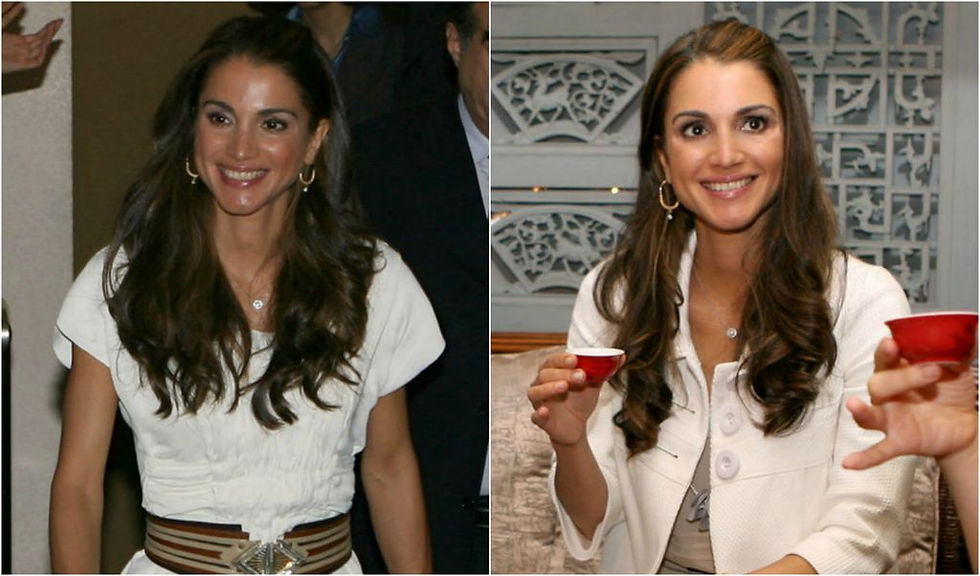
Queen Rania of Jordan wears "veželice"
Konavle's personal style of jewelry is a testament to a region that has produced some of the richest filigree and goldsmithing traditions in the history of our country. Despite its understated nature, the jewelry's powerful forms and masterful craftsmanship seamlessly integrate into the traditional folk costume, emphasizing its harmony, elegance, and aesthetic appeal.
Our identity is our greatest treasure. It is rooted in the language, culture, and traditions we have inherited from our ancestors. Therefore, it is our duty to preserve and pass them on so that future generations can also feel a sense of belonging and pride.


Comments